
Kids’ Shoe Size Guide: Find the Perfect Fit
Kids’ feet grow fast — and every stage of development needs a different kind of shoe. This guide keeps the original how-to steps you rely on (measuring, fit checks and when to replace), and adds evaluative detail so you can choose the right shoe for your child’s age, activity and foot shape.
The Measuring Guide
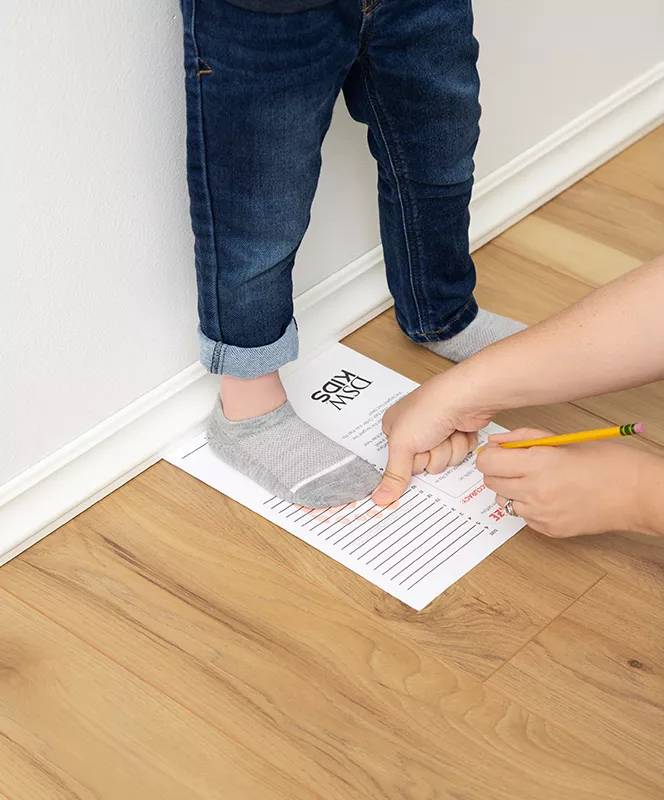
Click to download and print the kids’ shoe sizing tool to get started. Then, follow these three easy steps. You’ll know everything about kids’ shoe sizing in no time.
- Printable Kids’ Sizing Tool
- Make sure pants are rolled up and socks fit properly.
- Place the sizing tool on the floor next to a wall & have your child stand on it against the wall, with heels at the heel line.
- Mark where the tip of your child’s big toe ends, then add about a thumb-width space to determine a comfortable shoe size.
- Use the Kids’ Size Chart below (you can swap between inches and centimeters) to see which size is best.
No printer? You can still meaure your kid's foot by taking a piece of paper and tracing their feet.
- Prepare: Have your child stand in the socks they’ll wear with the shoes (or barefoot for sandals). Measure both feet — one foot is often larger.
- Method A — wall trace: Place a blank sheet against a wall, have the child stand with heel touching the wall, and mark the longest toe. Measure from heel to mark. Add about a thumb-width (roughly 1–1.5 cm) of growth room. Use the larger foot measurement to size.
- Method B — trace: If you can’t use a wall, trace the foot on paper while standing; measure heel to longest toe and add thumb-width.
- When to measure: measure at the end of the day when feet are at their largest. For children under 2, measure monthly; for toddlers up to about 5, measure every 6–8 weeks; for school-age children re-check every 8–12 weeks or when you notice fit changes.
Kid's Size Chart
| US/Canada | 1 | 2 | 3 | 4T | 5T | 6T | 7T | 8T | 9T | 10T | 11Y | 12Y | 13Y | 1Y | 2Y | 3Y | 4Y | 5Y | 6Y | 7Y |
|---|---|---|---|---|---|---|---|---|---|---|---|---|---|---|---|---|---|---|---|---|
| Europe | 16 | 17 | 18 | 19 | 20 | 22 | 23 | 24 | 25 | 27 | 28 | 30 | 31 | 32 | 33 | 34 | 36 | 37 | 38 | 39 |
| UK/Australia | 0.5 | 1 | 2 | 3 | 4 | 5 | 6 | 7 | 8 | 9 | 10 | 11 | 12 | 13 | 1 | 2 | 3 | 4 | 5 | 6 |
| Category | Baby | Baby | Baby | Toddler | Toddler | Toddler | Toddler | Toddler | Toddler | Toddler | Little Kid | Little Kid | Little Kid | Little Kid | Little Kid | Little Kid | Big Kid | Big Kid | Big Kid | Big Kid |
| Approx. Age | 0-3 months | 3-6 months | 6-12 months | 1-2 Yrs | 1-2 Yrs | 1-2 Yrs | 2 Yrs | 2 Yrs | 3 Yrs | 3-4 Yrs | 4-5 Yrs | 5 Yrs | 5-6 Yrs | 6-7 Yrs | 8-9 Yrs | 8-9 Yrs | 8-9 Yrs | 10+ Yrs | 10+ Yrs | 10+ Yrs |
| Foot Length | 3.5" | 3.75" | 4.125" | 4.5" | 4.75" | 5.125" | 5.5" | 5.75" | 6.125" | 6.5" | 6.75" | 7.125" | 7.5" | 7.75" | 8.125" | 8.5" | 8.75" | 9.125" | 9.5" | 9.75" |
How to know your kid's shoes fit properly
Standing test: With the child standing, there should be about a thumb-width between the longest toe and the end of the shoe. The shoe should not pinch across the toes or at the outer edge.
Wiggle test: Your child should be able to wiggle their toes comfortably. If toes scrape the toe box when walking, the shoe is too short.
Heel stability: The heel should be held firmly by the heel counter with minimal slippage when the child walks — a little slip when putting on is normal, but not an all-day slip.
Midfoot security: Laces, buckles or straps should hold the foot snugly without creating pressure points.
Break-in: A properly fitting shoe should be comfortable right away. Long “break-in” periods are a sign of unsuitable material or size.
For babies/new walkers: look for a flexible sole that bends at the toes, not in the arch; about ¼"–½" (a small growth allowance) is typical but focus on secure fit over leaving room to “grow into.”
Evaluative tips by age and foot needs
Toddlers/new walkers: prioritize flexible, lightweight soles and wide toe boxes so they can feel the ground and develop balance. Avoid heavy, stiff shoes.
Elementary (kindergarten–grade 5): look for a firm heel counter, moderate midsole cushioning and a durable outsole with good traction; many kids will benefit from a shoe with breathable mesh upper to avoid hot, sweaty feet.
Teens: focus on activity — runners and court athletes need shoes with sport-specific support; casual/“fashion” picks (like high-top basketball silhouettes) should still be structurally sound with supportive midsoles.
How Often Will Your Child Need New Shoes?
Measure often: infants/toddlers: monthly to every 6 weeks; ages 3–7: every 6–8 weeks; ages 8–12+: every 2–3 months, depending on growth spurts and activity.
Replace immediately if: toes hit the front, midsole is compressed (no cushioning), tread is worn smooth, heel counter fails, or your child complains of pain, blisters, or “tired” feet after activities.
Expect frequency to vary: active kids who play sports may need new shoes more often because of wear, not just outgrowing.
Quick tips for buying baby and kids' shoes - evaluative details
For infants & first walkers
Why skip heavy shoes early: early walkers benefit from barefoot or minimally structured soles to develop proprioception and balance.
Materials: breathable leathers or mesh resists moisture and softens quicker; anti-microbial linings reduce odor.
First-walker structure: choose a flexible forefoot with a stable heel cup and a non-slip sole for indoor/outdoor surfaces.
For toddlers & kids
Closures: toddlers need secure hook-and-loop closures or elastic bungee systems; elementary kids often prefer laces (or quick-lace systems) as they learn to tie.
Durability vs. fit: a shoe that lasts longer than the child needs is wasted money — prioritize supportive fit over extreme durability for very young children.
Orthotics and special needs: consult a pediatric podiatrist if your child has persistent pronation, foot pain or a diagnosed condition; many mainstream models accommodate removable insoles.
Practical buying checklist
Bring the child for a fitting at the end of the day in the same socks they’ll wear with the shoe.
Bring both shoes home and have the child walk, run and climb stairs inside before deciding.
Try two sizes if the fit is borderline; pick the size that offers secure heel hold with the thumb-width room at the toe.
If trying online, read product width notes and customer feedback on fit, and keep the return window in mind.
FAQ
Q: How often should I remeasure my child’s feet?
A: Under age 2: monthly; toddlers through early elementary: every 6–8 weeks; older kids: every 2–3 months or when fit issues arise.
Q: How do I know when to replace shoes because of wear (not just size)?
A: Replace if midsoles feel squashed (no rebound), tread is worn smooth, the heel counter collapses, or seams and linings have excess wear that causes rubbing or pain.
Q: Are expensive kids’ shoes always better?
A: Not necessarily—fit and function matter more than price. A well-fitting $30–$60 shoe can be better for a growing child than an $120 pair that doesn’t fit correctly.
Q: Should kids wear shoes to develop arches early?
A: No — early walkers benefit from flexible soles and opportunities to go barefoot safely; shoes should protect and allow natural movement rather than force arch development.
Q: What width is normal for a 5-year-old?
A: Most 5-year-olds wear a standard/medium width; request a wide option if the shoe pinches at the sides or the child’s foot bulges over the sole.
Shop Kids' Shoes at DSW
With all this information, you're ready to take on shoe shopping for your kiddos like a pro! Get them ready for back to school with our Back to School Shop and explore all the best kid's shoes at DSW. Or take a look at our curated picks for back-to-school!
Let your child help choose color and style within the family’s fit and activity requirements; kids are more likely to wear what they like.
Keep an eye on how they walk after a day in a new pair — redness, blisters or limping are signs a re-fit is needed.
If you suspect structural foot issues, consult a pediatric podiatrist rather than guessing with footwear alone.
Stay (style) inspired
PSA: Adidas Samba Indoor at DSW
The iconic Samba is already everywhere. See why it still stands the test of time.
DSW Trend Alert: Shades Of Brown
Show some love to fall’s full color palette—starting with brown. Elevate your style with rich tones and must-have accessories.
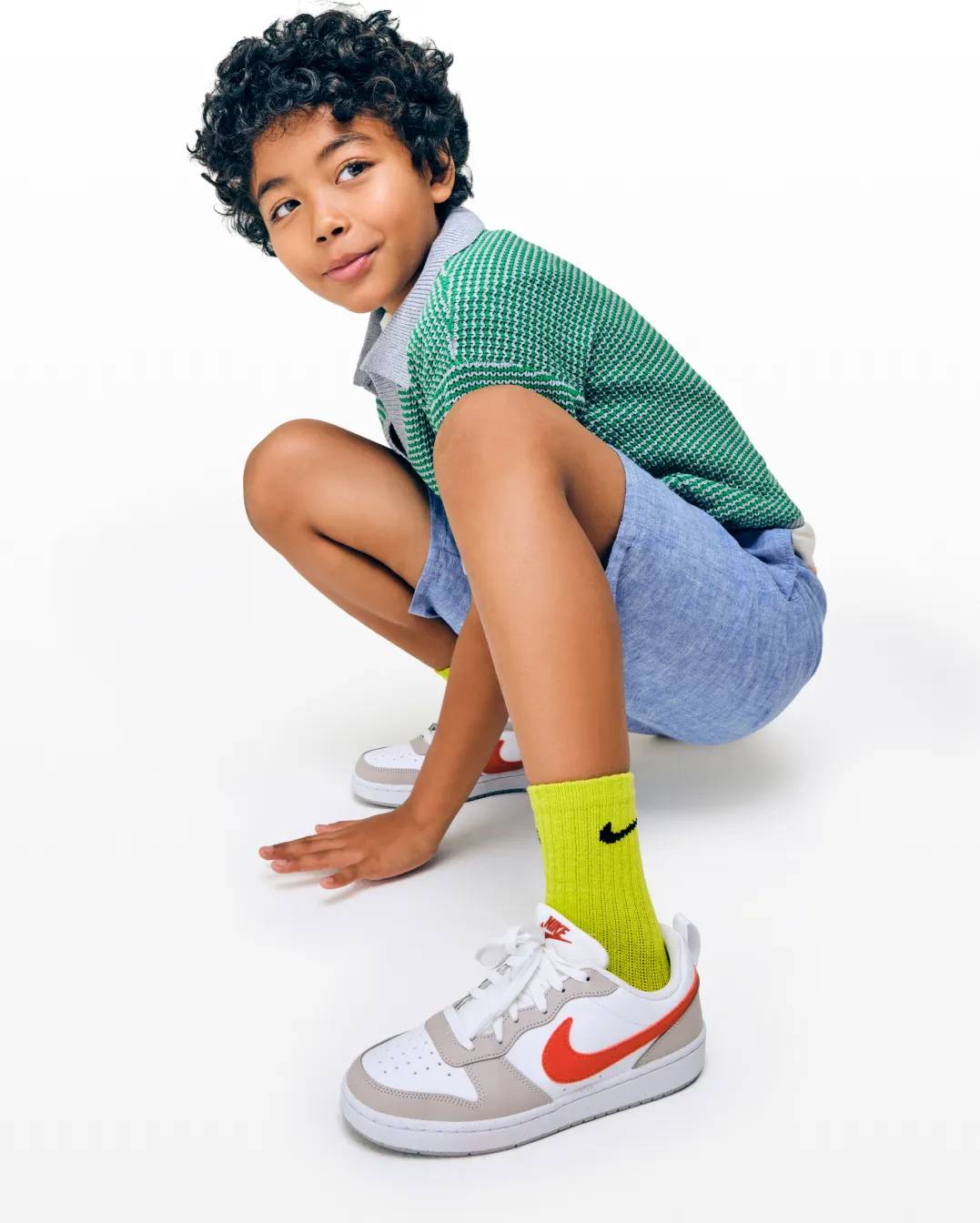
Kids’ shoe size guide
Find the perfect fit for your little ones.
Shop by fit
How Should a Shoe Fit?

Types of fashion sneakers
Your go-to guide for all the sneaker styles you need.
How to wear sneakers with dresses
Explore all the ways to wear this trendy combo.
Walking shoes buying guide
Learn the ins & outs of choosing the most comfortable shoes.
Style the Western Boot
Your first rodeo or not, get ready to enter your cowgirl era.
Gen Z shoe guide
We scoped the styles—come see what the cool crowd’s wearing.
Let Us Surprise You
Learn all about how DSW is finding joy in shopping for shoes and what our rebrand means for you.